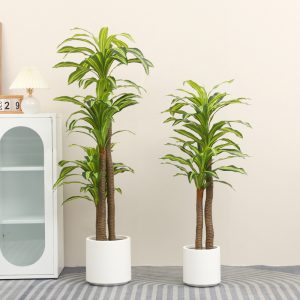
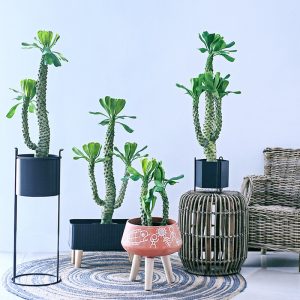
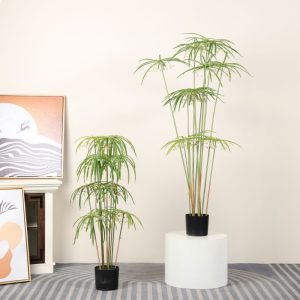
The global demand for artificial plants continues to rise. According to a market report by Emergen Research, the global artificial plants market was valued at USD 1.8 billion in 2024, and is expected to reach USD 2.9 billion by 2034, with a healthy CAGR of 4.8% over the decade. (Emergen Research)
As commercial projects seek greenery that needs little maintenance but still offers aesthetic appeal, artificial bamboo stands out as a smart and practical choice.
Why Natural Bamboo Often Falls Short for Large-Scale or Commercial Projects
- Strict environmental needs — Bamboo thrives only under specific soil, moisture, and climate conditions, which many commercial sites cannot guarantee.
- Lifecycle instability — Some bamboo species are prone to cyclical flowering and die-back, disrupting continuous greenery.
- High maintenance overhead — Large-scale planting demands irrigation, pest control, pruning, and replacement — all adding to long-term labor and resource costs.
In many commercial settings — offices, hotels, shopping centers — these constraints make natural bamboo a less dependable choice compared to synthetic alternatives.

Why Artificial Bamboo Works — Benefits Backed by Market Data & Material Advances
✅ Weather‑proof, Durable, Suitable for Indoor & Outdoor Use
Modern artificial plants (including bamboo) are often made from UV‑resistant, weather‑proof polymers. As noted in the 2024–2029 forecast by TechSci Research, demand is rising because such products can withstand sun exposure, rain, and fluctuating temperatures without fading or decay. (TechSci Research+1)
This makes artificial bamboo a viable option for outdoor plazas, terraces, rooftop gardens — even in climates where real bamboo might struggle.
💸 Low Maintenance and Stable Costs Over Time
Artificial bamboo does not require watering, fertilization, pruning, or seasonal replacement. That translates into predictable maintenance budgets and lower long-term operational costs — a major advantage for property managers and developers. According to TechSci Research, this cost-effectiveness is a key driver behind the growth in commercial adoption of artificial plants.
🎨 Flexible Design & Customization Possibilities
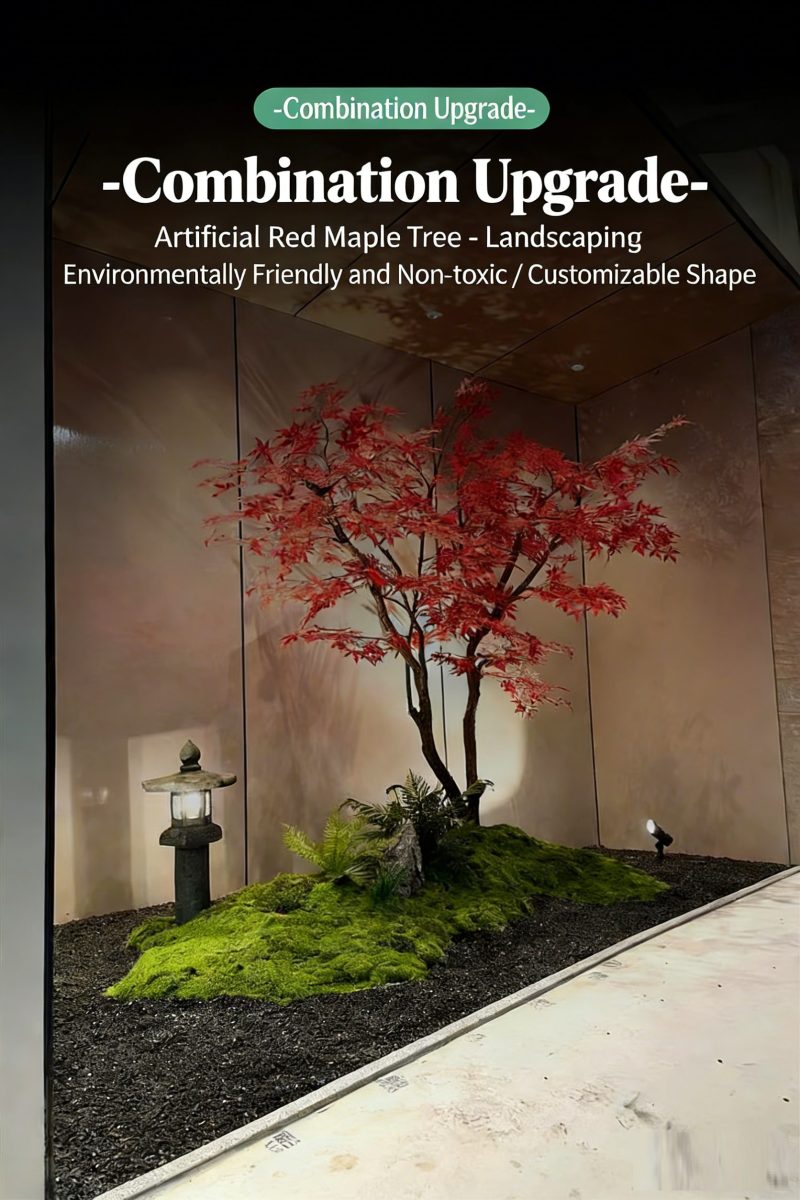
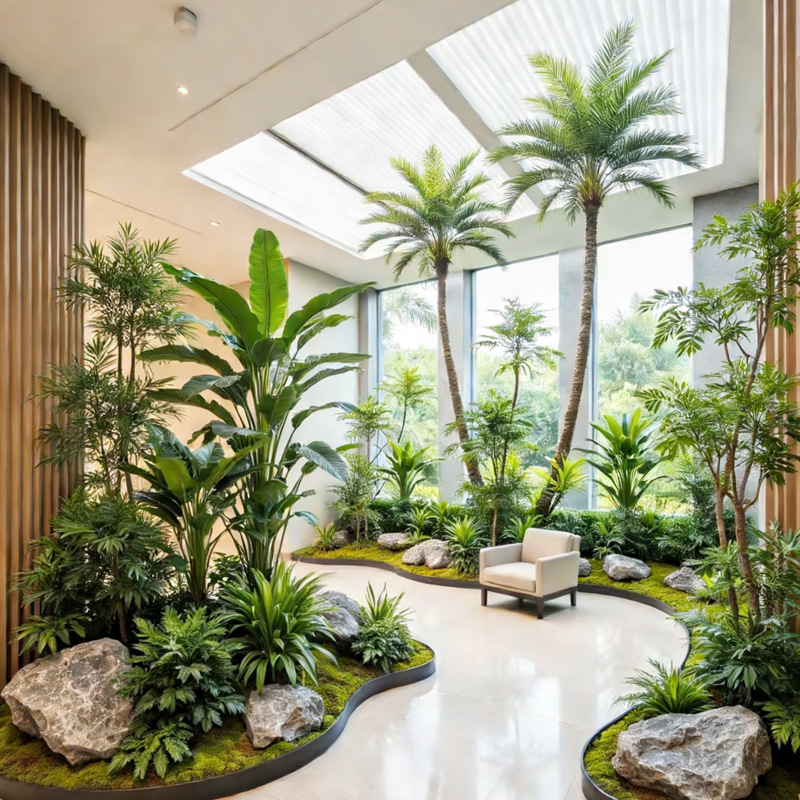
Unlike live plants, artificial bamboo is not constrained by soil, light, or climate. Designers can customize height, curvature, density, and container styles, enabling creative implementations such as vertical green walls, indoor atriums, or symmetrical hedges — even in challenging spaces like windowless corridors or rooftops.
📊 Industry Trend Signals Growing Market Acceptance
The upward trajectory of the artificial plants market reflects increasing trust and demand. In addition to Emergen Research’s data, some analyses forecast ongoing growth of artificial plants globally, supporting broader adoption across residential and commercial sectors. (TechSci Research)
Such momentum suggests artificial bamboo is no longer a niche or budget-only choice, but becoming mainstream in commercial landscaping.
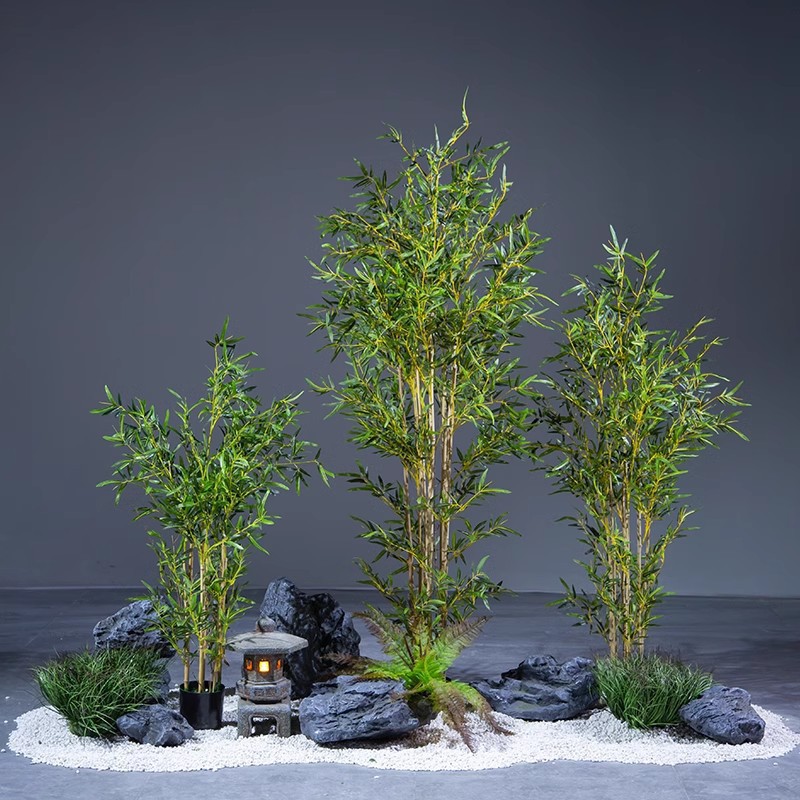
Typical Use Cases Where Artificial Bamboo Shines
| Scenario | Why It Works |
|---|---|
| Outdoor plazas, pedestrian zones, terraces | Weather‑resistant, no soil or irrigation required |
| Office lobbies, indoor malls, atriums | Provides year‑round greenery regardless of lighting or humidity |
| Hotels, resorts, retail storefronts | Delivers consistent aesthetics, avoids seasonal decline, reduces upkeep costs |
| Events, exhibitions, temporary installations | Easy installation & removal, reusable, visually uniform |
What Artificial Bamboo Doesn’t Provide — Trade-Offs to Consider
- No ecological benefits: It does not photosynthesize, produce oxygen, or support biodiversity like living plants.
- Authenticity perception: In design-sensitive environments (e.g. luxury hotels, high-end resorts), some clients or visitors may still prefer the “living feel” of natural plants.
- Sustainability concerns: Most artificial plants are plastic-based. Without proper disposal or recycling, long-term waste and environmental impact need to be managed responsibly — a common critique of synthetic greenery. As Emergen Research points out, environmental downsides remain a market restraint. (Emergen Research)
Conclusion: Artificial Bamboo as a Strategic Landscaping Choice
For many urban planners, property developers, and commercial designers — especially those facing climate constraints, maintenance budgets, or challenging site conditions — artificial bamboo offers a practical, cost-effective, and aesthetically consistent alternative to live greenery. With advances in material technology and market acceptance, it has become a viable mainstream landscaping solution rather than a compromise.
That said, for projects where ecological benefits, air quality, or natural biodiversity are priorities — live plants remain irreplaceable.
Given current market trends and performance data, artificial bamboo stands as a strategic landscaping option for modern commercial environments, balancing aesthetics, maintenance efficiency, and design flexibility.