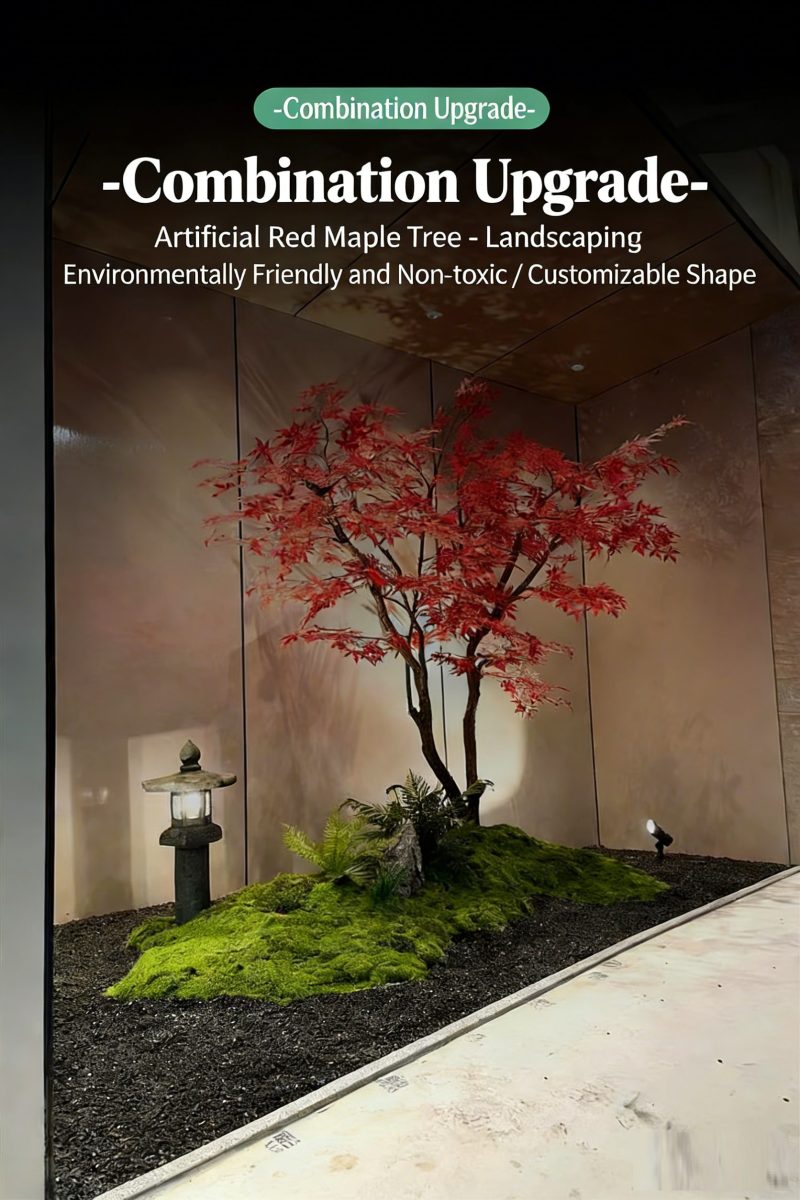
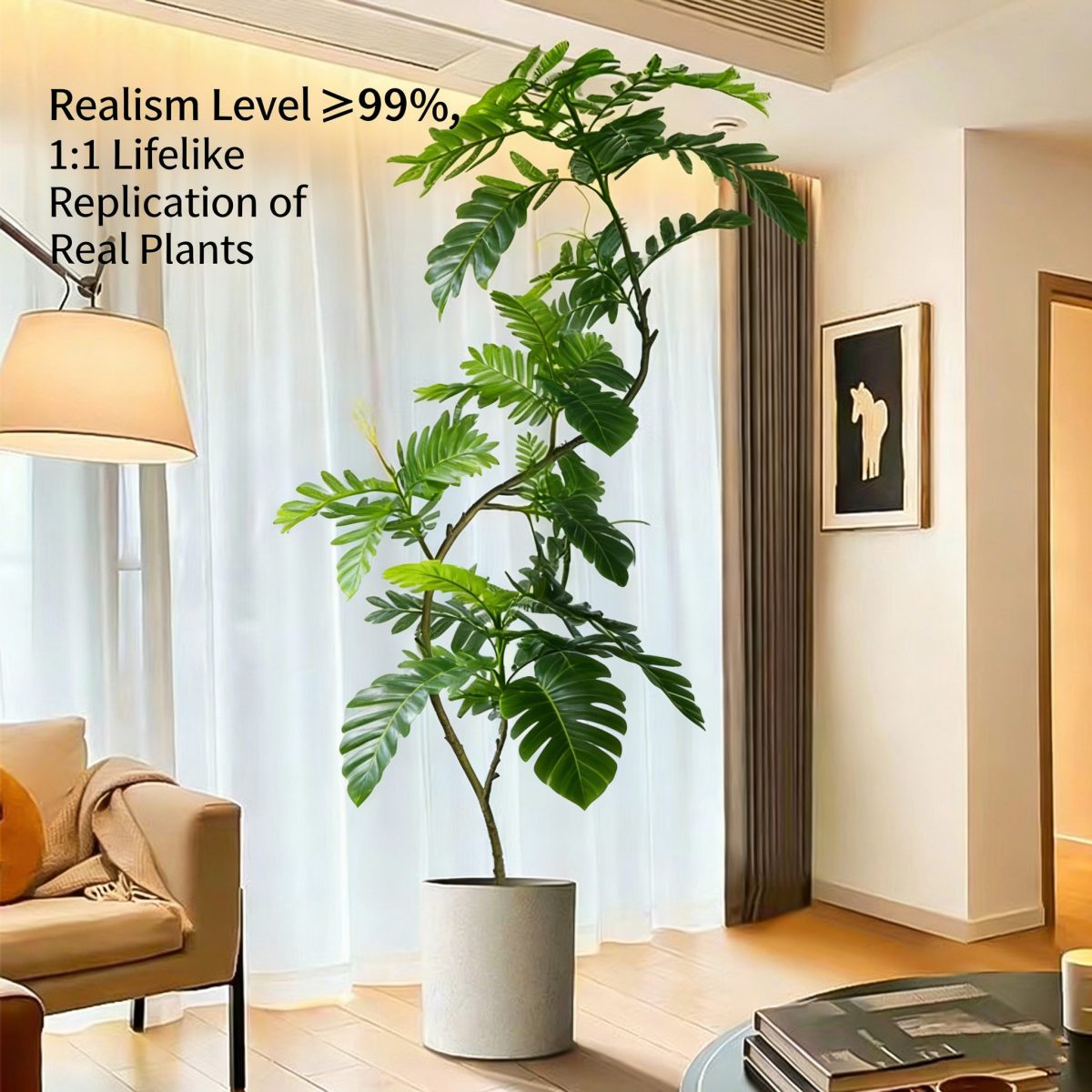
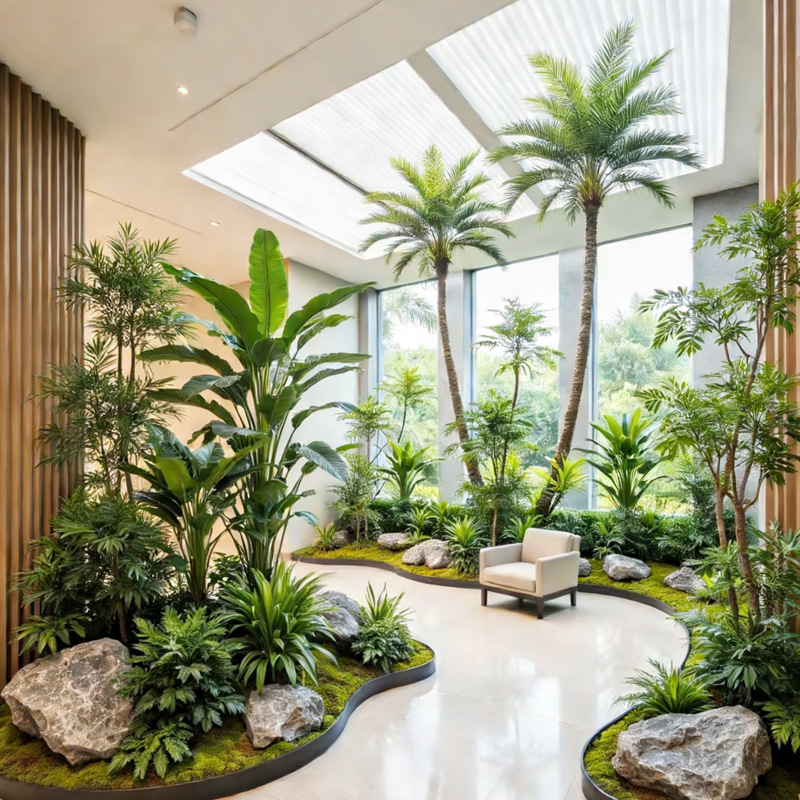
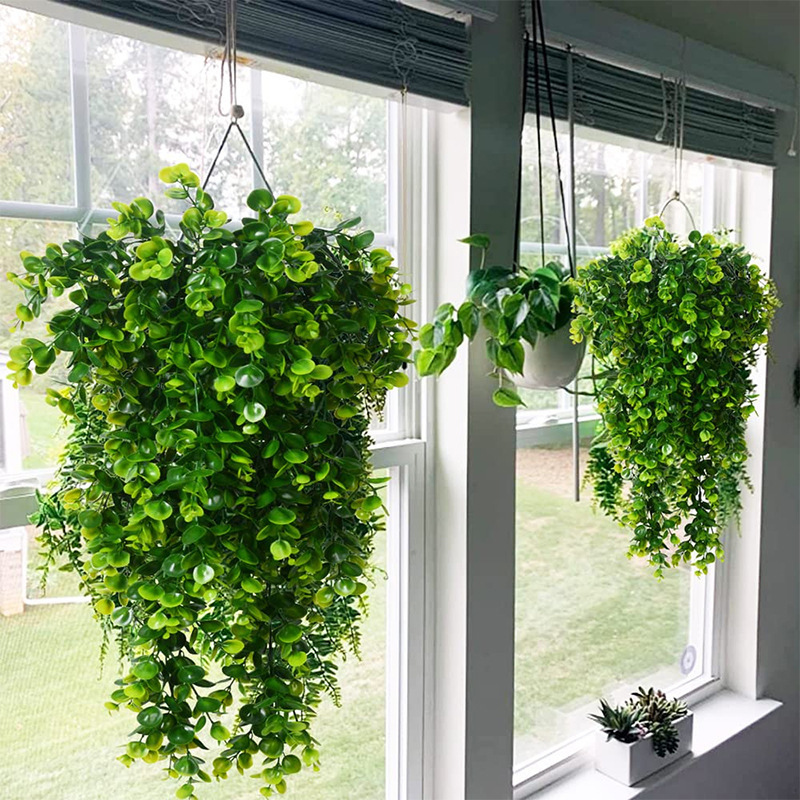
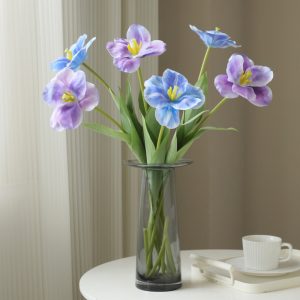
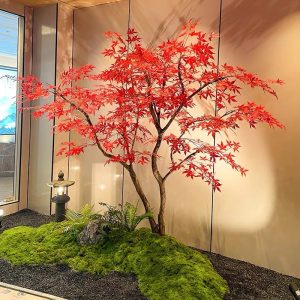
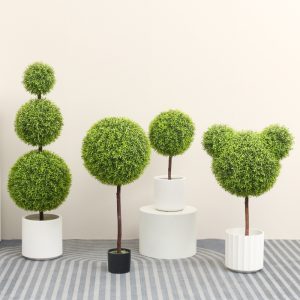
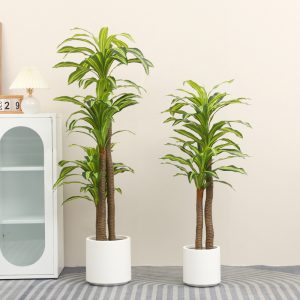
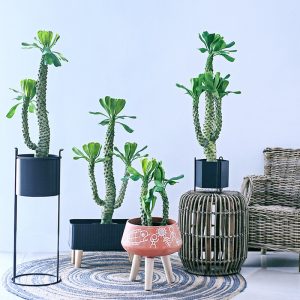
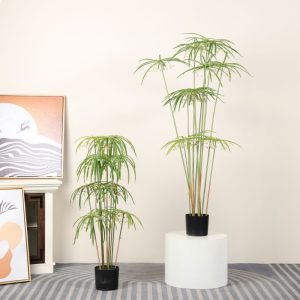
Artificial climbing plants are meticulously crafted to replicate the natural appearance, texture, and color of real vines. These plants, made from durable materials like Polyethylene (PE), Polyvinyl Chloride (PVC), and fabric blends, offer a low-maintenance solution for both residential and commercial spaces. They eliminate the need for regular watering, sunlight, and pruning, making them a popular choice for homeowners and businesses alike.
Materials Used in Artificial Climbing Plants
- Polyethylene (PE): Known for its durability, softness, and UV resistance, PE is the most commonly used material for artificial plant leaves. PE can withstand direct sunlight without fading, making it ideal for both indoor and outdoor applications. According to Statista (2024), PE remains the dominant material in the artificial plant market due to its superior longevity and color retention.
- Polyvinyl Chloride (PVC): PVC is more affordable than PE and is commonly used for stems and branches of artificial climbing plants. While PVC is stiffer and less flexible, it is still a popular choice due to its cost-effectiveness. PlasticsEurope (2023) reports that PVC remains a key player in the artificial plant industry.
- Silk and Fabric: Silk plants are known for their luxurious look and soft texture, making them a preferred choice for high-end décor. According to the National Garden Bureau (2022), silk plants are particularly popular in upscale markets for their realistic appearance and feel. National Garden Bureau
- Mixed Materials and Handcrafting: The most realistic artificial climbing plants combine PE and PVC, with expert craftsmanship that replicates the natural growth patterns of real vines. Forbes (2023) highlights that hybrid designs are in increasing demand for their authenticity and durability.
Market Outlook
The global artificial plant market was valued at $747.5 million in 2024 and is projected to reach $902.8 million by 2030, growing at a CAGR of 3.2%. This growth is largely driven by the increasing demand for low-maintenance greenery in urban environments. According to a Grand View Research (2023) report, artificial plants are becoming more popular due to their cost-effectiveness and ease of maintenance.
Creative Applications of Artificial Climbing Plants
Residential Spaces
- Living Room Feature Walls: Artificial climbing plants like ivy or fig vines can transform plain walls into lush green feature walls, providing a refreshing touch to your living room. According to a Houzz (2023) survey, 38% of homeowners have integrated artificial plants into their homes, noting the aesthetic and maintenance benefits.
- Bedroom and Window Accents: Artificial plants such as wisteria or silk ferns can be draped around windows or over the bed to create a tranquil, nature-inspired retreat. Architectural Digest (2022) explains that incorporating greenery into bedroom décor can reduce stress and improve sleep quality.
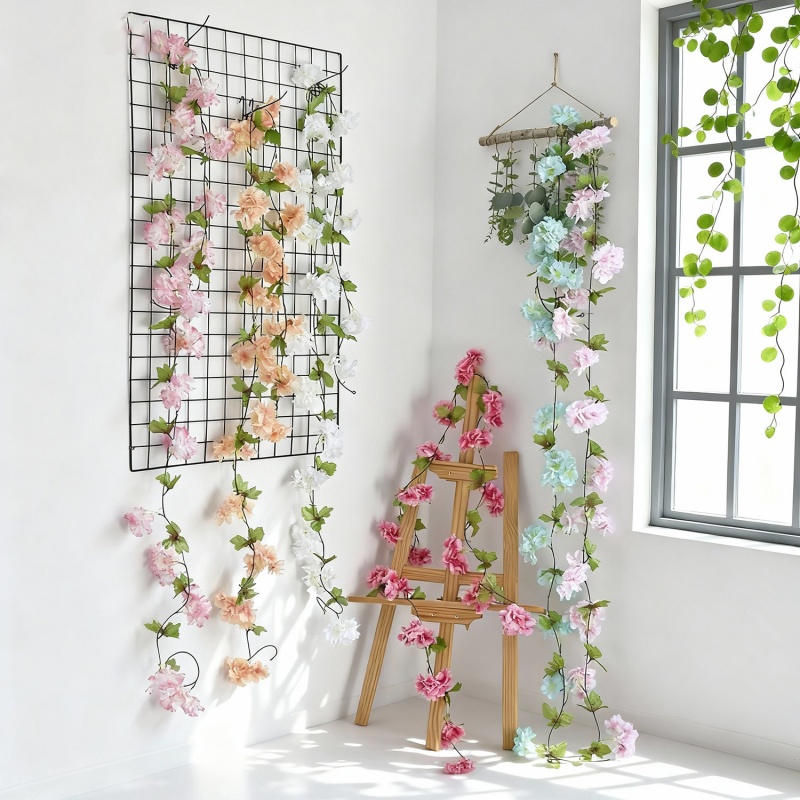
- Space Dividers: Artificial climbing plants can be integrated with wooden or metal grids to create visually appealing living partitions. Real Simple (2023) suggests using plants as room dividers to create an inviting atmosphere while maintaining an open, natural feel.
Commercial Spaces
- Offices and Hotels: Many businesses are incorporating artificial plants to create a relaxing and welcoming environment. According to Forbes (2023), artificial plants are favored in hospitality settings due to their aesthetic appeal and low-maintenance properties.
- Retail and Display Windows: Artificial climbing plants are an excellent choice for enhancing retail displays. A study by the International Journal of Retail & Distribution Management (2023) found that incorporating artificial greenery in retail environments can increase foot traffic by up to 15%.
Special Events and Weddings
For special events like weddings, trade shows, and exhibitions, artificial climbing plants offer a cost-effective and long-lasting solution. WeddingWire (2023) reports that 52% of event planners prefer using artificial plants for their low-maintenance and eco-friendly benefits.
Choosing the Right Artificial Climbing Plants
When selecting artificial climbing plants, consider the following factors:
- Color Variations: Real plants exhibit natural color transitions, so choose artificial plants with varied shades of green to replicate this. The University of Florida (2022) stresses that realistic color variation is key for lifelike artificial plants. University of Florida – Plant Care
- Material Texture: PE leaves are soft and flexible, providing a natural feel, while PVC leaves are stiffer and more synthetic. Green Building Advisor (2023) recommends selecting UV-resistant materials for outdoor use to prevent fading.
- Indoor vs. Outdoor Use:
- Indoor: Choose silk or PE plants for a soft, realistic appearance.
- Outdoor: For areas like balconies and patios, opt for UV-resistant plants to ensure they last longer.
- Style Pairing:
- Modern Minimalism: Lush vines like pothos or monstera complement sleek, clean aesthetics.
- Industrial Style: Dark vines like ivy or clematis are well-suited for industrial spaces.
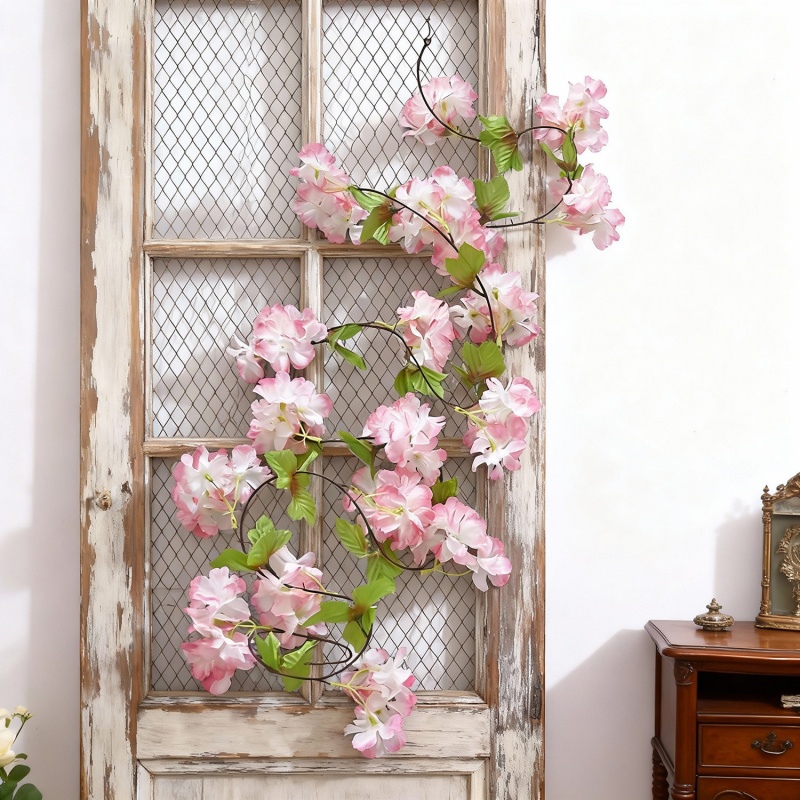
- Rustic or Vintage: Faux vines with small flowers such as roses or morning glories bring life to rustic or vintage interiors.
Installation & Maintenance Tips
- Installation:
- For larger vines, use adhesive hooks or nails.
- Secure smaller vines with transparent garden ties or hot glue.
- Hanging and Shaping: Choose vines with internal wires for flexible shaping. These are ideal for wrapping around stair rails, curtain rods, or ceilings.
- Cleaning & Care:
- Dusting: Use a cool blow dryer to remove dust weekly.
- Washing: Clean plants every 3-6 months with water or a mild vinegar solution.
- Spot Cleaning: For stains, gently wipe with a damp cloth.
Avoid placing plants near air conditioning vents or kitchens to prevent rapid dust accumulation.
Industry Trends and Future Outlook
The artificial plant industry is experiencing several key trends:
- Hyper-realistic Designs: Some brands are incorporating non-natural colors such as metallic and pastel shades for artistic installations. The New York Times (2023) notes that this trend reflects a growing desire for unique, creative designs.
- Sustainability: As consumer demand for eco-friendly products rises, many suppliers are using recycled materials or offering biodegradable options. Sustainable Business Magazine (2023) reports that sustainable artificial plants are a rapidly growing market segment.
- Comprehensive Solutions: Many suppliers now offer full-service solutions, including design, installation, and maintenance for large-scale commercial spaces like hotels and shopping malls.
Conclusion
Artificial climbing plants offer an eco-friendly, low-maintenance solution to introduce greenery into any environment. Whether enhancing a home, improving a commercial space, or preparing for a special event, these plants provide long-lasting beauty without the hassle of upkeep. Their durability and aesthetic appeal make them an excellent choice for both residential and commercial use.